A monk asked Tung Shan, "What is Buddha?" Tung Shan said, "Three pounds of flax".
Note: As a precursor, I am NOT advocating an all-out hedonism which I feel is very destructive. I can’t take the time to distinguish this view from hedonism because it’s frikin late, but understand that living in the moment is not the same as living for the moment and disregarding tomorrow.
Here's something that I've seen alot of in college (and it's become more and more prevalent as I've grown older): People not living in the moment. You know you've seen it, and, if you're like me, you're guilty of it also.
At its most innocent level, it is finals week. "I just want these tests to be over" or "Summertime will be SO nice". Unfortunately, halfway through the summer we've decided that school is awesome- no job, living with friends, etc. and soon enough we're back at school and the cycle starts again.
I’m thinking of a person who is always talking about the next trip, the next activity, the next weekend (maybe even the next night of the same weekend). A person can get so wrapped up in the idea of an activity that hasn't come to pass that they miss 80% of what they're doing in that moment. Unfortunately, this repeats during the very activity they were previously touting! I haven't heard many motivational speakers shouting to live life at 20%.
The same concept applies to the person who is at the party every Friday night, but is also on the phone at that very party talking to his/her friend to see if there is a better party.
I think this is a very important issue, but I think at the heart of it is our viewpoint. There is this flawed idea underlying all of this that looks at life as a checklist instead of a journey.
A quote to die by
"Life, of course, is something that can be enjoyed perfectly when all of my obligations are complete."
...
This statement is bad. It’s very bad. This thought process, this view that we have though we might not know it is profoundly detrimental to our lives and the enjoyment of our lives.
You've maybe heard this idea before but I don't think you can be at anywhere near your full potential in productivity, happiness, anything really until you've embraced this. From my observation, a loose pattern exists between these people who never really “dig” (as Kerouac would say) the present and a subsequent unhappiness.
Oh dear, what can I do?
1. Notice when you are looking forward to something and remember the present. The human mind, I think, has a way of embellishing things and ideas (of how great that party is going to be Friday night). The reality is that Friday won’t be as good as your mind makes it now, but this Tuesday afternoon at work is a whole lot better than you think it is at first glance.
2. Catch yourself saying the words “I can’t wait until”. I am not trying to say that looking forward to things is bad in itself. The excitement of a new undertaking is and should be exciting. All I’m saying is that that moment in the future is something you don’t have now, but you DO have the one you’re in, and understanding that is a big step towards enjoying your life more.
3. Notice the little things. If you’re having trouble enjoying a walk through the forest, don’t wait for a spectacular hilltop view which might never come. Instead, pick up a leaf from the ground. Look at it. Bring it right up next to your eye so you can see the intricacy, every little vein and its branching “sub-veins” bringing life to each part of the leaf.
4. This is just an idea I had. You could call it an exercise in Zen. The idea is simply a trip, a road trip, perhaps, with no destination. If you deliberately did not have a destination, then you could not look forward to a destination. If you wanted to enjoy your trip you would be forced to do it along the way. The drive, the stops, the conversation would have to consume your attention because there would be nothing else to take it. You could not depend on an idea formed in your head about a future activity.
Ok, this is getting long and I feel I’m just scratching the surface of what I could write. I’ll try to wrap it up (but that’s what I told her, giggidy).
At any moment there are infinite things you can see and an infinite way to think about these things. Enjoy that. I’ll leave you with a teaching method of Robert Pirsig, a Freshman English teacher.
He’d been having trouble with students who had nothing to say. At first he thought it was laziness but later it became apparent that it wasn’t. They just couldn’t think of anything to say.
One of them, a girl with strong-lensed glasses, wanted to write a five-hundred-word essay about the United States. He was used to the sinking feeling that comes from statements like this, and suggested without disparagement that she narrow it down to just Bozeman.
When the paper came due she didn’t have it and was quite upset. She had tried and tried but she just couldn’t think of anything to say.
He had already discussed her with her previous instructors and they’d confirmed his impressions of her. She was very serious, disciplined and hardworking, but extremely dull. Not a spark of creativity in her anywhere. Her eyes, behind the thick-lensed glasses, were the eyes of a drudge. She wasn’t bluffing him, she really couldn’t think of anything to say, and was upset by her inability to do as she was told.
It just stumped him. Now he couldn’t think of anything to say. A silence occurred, and then a peculiar answer: "Narrow it down to the main street of Bozeman." It was a stroke of insight.
She nodded dutifully and went out. But just before her next class she came back in real distress, tears this time, distress that had obviously been there for a long time. She still couldn’t think of anything to say, and couldn’t understand why, if she couldn’t think of anything about all of Bozeman, she should be able to think of something about just one street.
He was furious. "You’re not looking!" he said. A memory came back of his own dismissal from the University for having too much to say. For every fact there is an infinity of hypotheses. The more you look the more you see. She really wasn’t looking and yet somehow didn’t understand this.
He told her angrily, "Narrow it down to the front of one building on the main street of Bozeman. The Opera House. Start with the upper left-hand brick."
Her eyes, behind the thick-lensed glasses, opened wide. She came in the next class with a puzzled look and handed him a five-thousand-word essay on the front of the Opera House on the main street of Bozeman, Montana. "I sat in the hamburger stand across the street," she said, "and started writing about the first brick, and the second brick, and then by the third brick it all started to come and I couldn’t stop. They thought I was crazy, and they kept kidding me, but here it all is. I don’t understand it."
Neither did he, but on long walks through the streets of town he thought about it and concluded she was evidently stopped with the same kind of blockage that had paralyzed him on his first day of teaching. She was blocked because she was trying to repeat, in her writing, things she had already heard, just as on the first day he had tried to repeat things he had already decided to say. She couldn’t think of anything to write about Bozeman because she couldn’t recall anything she had heard worth repeating. She was strangely unaware that she could look and see freshly for herself, as she wrote, without primary regard for what had been said before. The narrowing down to one brick destroyed the blockage because it was so obvious she had to do some original and direct seeing.
He experimented further. In one class he had everyone write all hour about the back of his thumb. Everyone gave him funny looks at the beginning of the hour, but everyone did it, and there wasn’t a single complaint about "nothing to say."
In another class he changed the subject from the thumb to a coin, and got a full hour’s writing from every student. In other classes it was the same. Some asked, "Do you have to write about both sides?" Once they got into the idea of seeing directly for themselves they also saw there was no limit to the amount they could say.
-Brett
Wednesday, August 29, 2007

Tuesday, August 28, 2007
Thinkers worth thinking about
Alright, so here are some of the philosophers I've studied this summer and liked for some reason. It could be that I agreed with an idea or maybe just enjoyed their personality, but these are the men that I've come to regard with a certain warmth. Here's my academy award acceptance speech (a list of people who have influenced me these last three months).
1. Socrates:
The dad of philosophy. My favorite of the "Big 3" from Ancient Greece. He gave thought that could tear down anything in its path. Yet, as a person he owned a kindness and humble understanding that was the foundation of the love that his disciples had for him. Plato's retelling of his death is a moving work.
2. Soren Kierkegaard:
Soren is maybe the favorite person of my summer. He is a Christian of a different breed, the father of existensialism (that's right all you Nietzsche fans- Soren beat him to it). I most like his ideas on faith- that doubt is essential to faith, and without doubt, it is no longer faith. Also, his relationship between faith and reason must be noted I think- he believed that faith was in spite of reason (instead of the current accepted idea that faith is merely a supplement to reason). Always a harsh critic of the church and even more a critic of people who never questioned, I think I would have gotten along quite well with Soren Kierkegaard.
3. Baruch, Baruch, Baruch is on fire:
The gentle giant of philosophy, Baruch Spinoza, worked out the most important philosophical works of the millenia in the quiet upstairs of a family house after he was excommunicated from the Jewish church in the 17th century. I really like the fact that though he had developed an overwhelming philosophy of his own, he got along with and never undermined the Christian family that was living downstairs. He was loved and studied very much by many people (including Al Einstein). I disagree with his pantheism, which is central to his philosophy but I really admire the all-encompassing "completeness" of Spinozism.
4. Voltaire:
Though I disagree with him about God (and most things, actually) and smile knowingly when I consider his remarks on religion, I can't help but love the personality that was François-Marie Arouet. His wit and ambition (he wrote over 100 VOLUMES!) are amazing. Voltaire's sense of humor amazingly survived his many trips to the Bastille and his knowing way with people allowed him to insult the king's ideas to his face (ever so gently) in the famous dinner discussions hosted by King Louis.
Well, those are the peeps that I had time to write a quickie about. I would also maybe include Blaise Pascal as another amazing Christian thinker whose famous "wager" made manifest the thoughts of all men, Plato as an ambitious dreamer whose Republic should be noted by all leaders, but never attempted, Aristotle as the man who has influenced you (yes, you who are reading) more than you'll ever know (I have a sort of love/hate feeling towards Aristotle), Bertrand Russell, one of the most brilliant, warm, understanding atheists I've ever read, G.K. Chesterton- the unflinching apostle of common sense whose conversion (and probably his sense of humor) inspired the likes of C.S. Lewis, and finally Ravi Zacharias, whose podcasts always seem to have a way of bringing me back to Christianity.
Yowzers, there is much that could be expounded on in these posts and perhaps I'll get a chance in short order! (Wow that made me sound a bit like a British buffoon)
-Brett
1. Socrates:
The dad of philosophy. My favorite of the "Big 3" from Ancient Greece. He gave thought that could tear down anything in its path. Yet, as a person he owned a kindness and humble understanding that was the foundation of the love that his disciples had for him. Plato's retelling of his death is a moving work.
2. Soren Kierkegaard:
Soren is maybe the favorite person of my summer. He is a Christian of a different breed, the father of existensialism (that's right all you Nietzsche fans- Soren beat him to it). I most like his ideas on faith- that doubt is essential to faith, and without doubt, it is no longer faith. Also, his relationship between faith and reason must be noted I think- he believed that faith was in spite of reason (instead of the current accepted idea that faith is merely a supplement to reason). Always a harsh critic of the church and even more a critic of people who never questioned, I think I would have gotten along quite well with Soren Kierkegaard.
3. Baruch, Baruch, Baruch is on fire:
The gentle giant of philosophy, Baruch Spinoza, worked out the most important philosophical works of the millenia in the quiet upstairs of a family house after he was excommunicated from the Jewish church in the 17th century. I really like the fact that though he had developed an overwhelming philosophy of his own, he got along with and never undermined the Christian family that was living downstairs. He was loved and studied very much by many people (including Al Einstein). I disagree with his pantheism, which is central to his philosophy but I really admire the all-encompassing "completeness" of Spinozism.
4. Voltaire:
Though I disagree with him about God (and most things, actually) and smile knowingly when I consider his remarks on religion, I can't help but love the personality that was François-Marie Arouet. His wit and ambition (he wrote over 100 VOLUMES!) are amazing. Voltaire's sense of humor amazingly survived his many trips to the Bastille and his knowing way with people allowed him to insult the king's ideas to his face (ever so gently) in the famous dinner discussions hosted by King Louis.
Well, those are the peeps that I had time to write a quickie about. I would also maybe include Blaise Pascal as another amazing Christian thinker whose famous "wager" made manifest the thoughts of all men, Plato as an ambitious dreamer whose Republic should be noted by all leaders, but never attempted, Aristotle as the man who has influenced you (yes, you who are reading) more than you'll ever know (I have a sort of love/hate feeling towards Aristotle), Bertrand Russell, one of the most brilliant, warm, understanding atheists I've ever read, G.K. Chesterton- the unflinching apostle of common sense whose conversion (and probably his sense of humor) inspired the likes of C.S. Lewis, and finally Ravi Zacharias, whose podcasts always seem to have a way of bringing me back to Christianity.
Yowzers, there is much that could be expounded on in these posts and perhaps I'll get a chance in short order! (Wow that made me sound a bit like a British buffoon)
-Brett
Sunday, August 26, 2007
The passage of my summer
So here is all the books I read this summer (in Brett chronological order):
1. I Love Mormons
2. Way of the Wild Heart
3. The Complete Idiot's Guide to World Religions
4. Zen and the Art of Motorcycle Maintenance
5. Blue Like Jazz
6. The Story of Philosophy
and currently reading
7. Motley Fool Investment Guide
8. Orthodoxy
I'd guess that's going on 3500-4000 pages of material of all non-fiction. Giggidy goo- that's how I get the ladies.
Anywho, I said that I would post this, and post it I shall. The following is from Zen and the Art of Motorcycle Maintenance and I really identify with it right now.
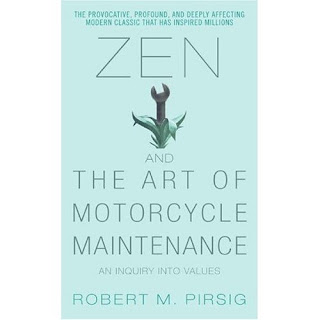
First, a summary of the book: A philosophical autobiography disguised as a motorcyle adventure across America.
A quick read on the relatively mysterious author is well worth the 60 seconds it will take.
Robert M. Pirsig
Anywho, this is a passage in the book as they begin to ascend into the mountains and as their trip ascends to high altitude he gradually begins speaking about a different kind of high country, the "high country of the mind".
"Few people travel here. There's no real profit to be made from wandering through it, yet like this high country of the material world all around us, it has its own austere beauty that to some people make the hardships of traveling through it seem worthwhile.
In the high country of the mind one has to become adjusted to the thinner air of uncertainty, and to the enormous magnitude of questions asked , and to the answers proposed to these questions. The sweep goes on and on and on so obviously much further than the mind can grasp one hesitates even to go near for fear of getting lost in them and never finding one's way out."
If you've ever read deeply into philosophy you know exactly what Pirsig is writing about and I think he says it very poetically, but very accurately. I think the majority floats through life without real, open-minded (I mean completely open-minded) questioning.
If you've got another few minutes and you've already clipped your toenails and got all the lint out of your bellybutton with a golf pencil, read this story of "The Good Brahmin" by Voltaire, a lovable frenchman who also possessed one of the great minds of all time.
"I wish I had never been born!" the Brahmin remarked.
"Why so?" said I.
"Because," he replied, "I have been studying these forty years, and I find that it has been so much time lost...I believe that I am composed of matter, but I have never been able to satisfy myself what it is that produces thought. I am even ignorant whether my understanding is a simple faculty like that of walking or digesting, or if I think with my head in the same manner as I take hold of a thing with my hands...I talk a great deal, and when I have done speaking I remain confounded and ashamed of what I have said."
The same day I had a conversation with an old woman, his neighbor. I asked her if she had ever been unhappy for not understanding how her soul was made? She did not even comprehend my question. She had not, for the briefest moment in her life, had a thought about these subjects with which the good Brahmin had so tormented himself. She believed in the bottom of her heart in the metamorphoses of Vishnu, and provided she could get some of the sacred water of the Ganges in which to make her ablutions, she thought herself the happiest of women. Struck with the happiness of this poor creature, I returned to my philosopher, whom I thus addressed:
"Are you not ashamed to be thus miserable when, not fifty yards from you, there is an old automaton who thinks of nothing and lives contented?"
"You are right," he replied. "I have said to myself a thousand times that I should be happy if I were but as ignorant as my old neighbor; and yet it is a happiness which I do not desire."
This reply of the Brahmin made a greater impression on me than anything that had passed.
I really like Voltaire
-Brett
1. I Love Mormons
2. Way of the Wild Heart
3. The Complete Idiot's Guide to World Religions
4. Zen and the Art of Motorcycle Maintenance
5. Blue Like Jazz
6. The Story of Philosophy
and currently reading
7. Motley Fool Investment Guide
8. Orthodoxy
I'd guess that's going on 3500-4000 pages of material of all non-fiction. Giggidy goo- that's how I get the ladies.
Anywho, I said that I would post this, and post it I shall. The following is from Zen and the Art of Motorcycle Maintenance and I really identify with it right now.

First, a summary of the book: A philosophical autobiography disguised as a motorcyle adventure across America.
A quick read on the relatively mysterious author is well worth the 60 seconds it will take.
Robert M. Pirsig
Anywho, this is a passage in the book as they begin to ascend into the mountains and as their trip ascends to high altitude he gradually begins speaking about a different kind of high country, the "high country of the mind".
"Few people travel here. There's no real profit to be made from wandering through it, yet like this high country of the material world all around us, it has its own austere beauty that to some people make the hardships of traveling through it seem worthwhile.
In the high country of the mind one has to become adjusted to the thinner air of uncertainty, and to the enormous magnitude of questions asked , and to the answers proposed to these questions. The sweep goes on and on and on so obviously much further than the mind can grasp one hesitates even to go near for fear of getting lost in them and never finding one's way out."
If you've ever read deeply into philosophy you know exactly what Pirsig is writing about and I think he says it very poetically, but very accurately. I think the majority floats through life without real, open-minded (I mean completely open-minded) questioning.
If you've got another few minutes and you've already clipped your toenails and got all the lint out of your bellybutton with a golf pencil, read this story of "The Good Brahmin" by Voltaire, a lovable frenchman who also possessed one of the great minds of all time.
"I wish I had never been born!" the Brahmin remarked.
"Why so?" said I.
"Because," he replied, "I have been studying these forty years, and I find that it has been so much time lost...I believe that I am composed of matter, but I have never been able to satisfy myself what it is that produces thought. I am even ignorant whether my understanding is a simple faculty like that of walking or digesting, or if I think with my head in the same manner as I take hold of a thing with my hands...I talk a great deal, and when I have done speaking I remain confounded and ashamed of what I have said."
The same day I had a conversation with an old woman, his neighbor. I asked her if she had ever been unhappy for not understanding how her soul was made? She did not even comprehend my question. She had not, for the briefest moment in her life, had a thought about these subjects with which the good Brahmin had so tormented himself. She believed in the bottom of her heart in the metamorphoses of Vishnu, and provided she could get some of the sacred water of the Ganges in which to make her ablutions, she thought herself the happiest of women. Struck with the happiness of this poor creature, I returned to my philosopher, whom I thus addressed:
"Are you not ashamed to be thus miserable when, not fifty yards from you, there is an old automaton who thinks of nothing and lives contented?"
"You are right," he replied. "I have said to myself a thousand times that I should be happy if I were but as ignorant as my old neighbor; and yet it is a happiness which I do not desire."
This reply of the Brahmin made a greater impression on me than anything that had passed.
I really like Voltaire
-Brett
What you want (Baby I got it)
**So this is taking off from my last post of whether or not it's good to be a static person. I think the idea of intimacy fits in here somehow...**
So, I do have a couple people that I think have a good feel for the entire Brett Ripley spectrum and it's noteworthy that long talks with these people seem to be about the most therapeutic thing I can do.
I think that's one of the deepest desires of us little humans: real intimacy. To be known fully, with all the good, and more importantly, with all the bad, and to be loved for who you really are.
This need for deep connection though is many times disguised and mistaken for a myriad of feelings. In both Western and Eastern cultures this need is often played out as a desire for sex, or money, or buying things, or being popular or famous, or status. A person just wants -no- NEEDS to hear "You're good. You're good where you're at right now. "
What most people get is "you'll be good if..." or "you'll be good when..." and this leads to other bad things (that I'll have to save for another post :) ).
I think that's what makes God, especially the God revealed through Christianity so appealing. He knows you more than you know yourself. All that good stuff you did? He saw it. All those selfish things you did? He saw it. All those triumphant feelings when you aced that test or won that game or gave that speech? That pain you feel, that guilt, that isolation? Yeah, whether you knew it or not he was right there with you. He knows YOU and he knows you even more than your closest friends. And the best part of all? He loves you for it- loves you like crazy.
Sounds good, right? The only thing is that you can't have a conversation with him like with your friends. It's different. You have to pray, but even then you likely won't use your ears. Wait a minute. This great friend is there and he won't even talk to you! What kind of friend is that?
Alot of times this straight up just pisses me off- just makes me want to say this whole God thing is just a bunch of bullshit and all religious people are a bunch of frightened, blubbering idiots believing what their elders say just because they say it.
OR maybe this God is a kind of a father figure and just wants to teach you discipline and patience (and faith?) enough to dedicate time to sitting in silence and letting the world go by without you. Maybe.
-Brett
PS I've discovered that my typing can go for about 3 pages per dribble now that I've pent up all this thinking and all of these ideas for the last three months. These last three posts were going to be one little update. This could maybe turn out to be an interesting blog yet...
So, I do have a couple people that I think have a good feel for the entire Brett Ripley spectrum and it's noteworthy that long talks with these people seem to be about the most therapeutic thing I can do.
I think that's one of the deepest desires of us little humans: real intimacy. To be known fully, with all the good, and more importantly, with all the bad, and to be loved for who you really are.
This need for deep connection though is many times disguised and mistaken for a myriad of feelings. In both Western and Eastern cultures this need is often played out as a desire for sex, or money, or buying things, or being popular or famous, or status. A person just wants -no- NEEDS to hear "You're good. You're good where you're at right now. "
What most people get is "you'll be good if..." or "you'll be good when..." and this leads to other bad things (that I'll have to save for another post :) ).
I think that's what makes God, especially the God revealed through Christianity so appealing. He knows you more than you know yourself. All that good stuff you did? He saw it. All those selfish things you did? He saw it. All those triumphant feelings when you aced that test or won that game or gave that speech? That pain you feel, that guilt, that isolation? Yeah, whether you knew it or not he was right there with you. He knows YOU and he knows you even more than your closest friends. And the best part of all? He loves you for it- loves you like crazy.
Sounds good, right? The only thing is that you can't have a conversation with him like with your friends. It's different. You have to pray, but even then you likely won't use your ears. Wait a minute. This great friend is there and he won't even talk to you! What kind of friend is that?
Alot of times this straight up just pisses me off- just makes me want to say this whole God thing is just a bunch of bullshit and all religious people are a bunch of frightened, blubbering idiots believing what their elders say just because they say it.
OR maybe this God is a kind of a father figure and just wants to teach you discipline and patience (and faith?) enough to dedicate time to sitting in silence and letting the world go by without you. Maybe.
-Brett
PS I've discovered that my typing can go for about 3 pages per dribble now that I've pent up all this thinking and all of these ideas for the last three months. These last three posts were going to be one little update. This could maybe turn out to be an interesting blog yet...
Electric People
Static People
I am amazed by static people. No, there's not people that will make your hand spark when you touch them, I'm talking about a different kind of static.
I'm talking about people who are the same no matter who they are around. I've only met a few of these people in my life.
Think about it: Most people compartmentalize their life to a pretty good extent. I've found that I, more than almost anyone I know, do this. The idea is that you are a different person around different people. Do you talk the same way to your pastor as you do to your old friends? Even within your circle of friends, don't you talk about different things and even have different mannerisms/sayings when you are with different groups of friends? Do you act differently with large groups as opposed to just one person.
I'll be the first one to say I'm guilty of this. I have so many hobbies and interests (and groups that go along with these). I mean from "class" friends to "rec" friends to "High School" friends to "Technical (nerdy)" friends to "how the crap did I ever meet this person" friends to "Hang out on the weekend" friends to, dare I say, "Religious friends" to extended family.
Part of it of course is a necessity of circumstance: I don't think anyone can give a lecture to 20,000 people with the same persona as when talking one-on-one in a coffee shop: It's apples and oranges and it should be that way (although some people have the gift of being very real and even personal when delivering speeches to massive audiences).
Some people might say this is a bad thing. Some may say it's good and "normal". I'm not sure. Maybe it's a healthy outlet to different aspects of our emotions. Maybe it's unhealthy to be so unsure of who our true self is. If anyone has any input on "compartmentalization", I'd love to hear it.
-Brett
I think Switchfoot has a song about this called 24.
I am amazed by static people. No, there's not people that will make your hand spark when you touch them, I'm talking about a different kind of static.
I'm talking about people who are the same no matter who they are around. I've only met a few of these people in my life.
Think about it: Most people compartmentalize their life to a pretty good extent. I've found that I, more than almost anyone I know, do this. The idea is that you are a different person around different people. Do you talk the same way to your pastor as you do to your old friends? Even within your circle of friends, don't you talk about different things and even have different mannerisms/sayings when you are with different groups of friends? Do you act differently with large groups as opposed to just one person.
I'll be the first one to say I'm guilty of this. I have so many hobbies and interests (and groups that go along with these). I mean from "class" friends to "rec" friends to "High School" friends to "Technical (nerdy)" friends to "how the crap did I ever meet this person" friends to "Hang out on the weekend" friends to, dare I say, "Religious friends" to extended family.
Part of it of course is a necessity of circumstance: I don't think anyone can give a lecture to 20,000 people with the same persona as when talking one-on-one in a coffee shop: It's apples and oranges and it should be that way (although some people have the gift of being very real and even personal when delivering speeches to massive audiences).
Some people might say this is a bad thing. Some may say it's good and "normal". I'm not sure. Maybe it's a healthy outlet to different aspects of our emotions. Maybe it's unhealthy to be so unsure of who our true self is. If anyone has any input on "compartmentalization", I'd love to hear it.
-Brett
I think Switchfoot has a song about this called 24.
Back in the (US)PR
So I write this post from Pelican Rapids High School! I'm actually in Frau's room right now leeching some school bandwidth and downloading Ubuntu 7.04. Apparently there's some new IT guy that works for the school that would maybe call the cops if he caught me hooked up to a computer here, so hopefully he's not working on a Sunday afternoon.
Recappage
1. Thursday night was f-ing fun and I'm really pumped to be living in the house that I'm living in with a bunch of sweet people. I think the challenge with roommates is always to still think they're sweet people at the end of the year! I don't expect too many probs.
2.Home Sweet Home: I am very very happy to be home, living in the house I grew up in, staying with my family, and seeing my close friends.
3. My quest through nerddom: If you know me, then you know that I have a very nerdy side to me that loves computers with a passion. This is my task for this week:
Swap in my new 500GB Hard drive and set up a dual boot with Ubuntu Linux and Windows Vista: Ultimate Edition.
Yeah, it's weird, but I really enjoy little projects like this. I love tinkering with my computer and learning/solving problems as they come up. I wonder if I'll be able to incorporate my EE degree into something like this for a jobber?
Anywho, it's good to be home without a schedule and without a job!
-Brett
Recappage
1. Thursday night was f-ing fun and I'm really pumped to be living in the house that I'm living in with a bunch of sweet people. I think the challenge with roommates is always to still think they're sweet people at the end of the year! I don't expect too many probs.
2.Home Sweet Home: I am very very happy to be home, living in the house I grew up in, staying with my family, and seeing my close friends.
3. My quest through nerddom: If you know me, then you know that I have a very nerdy side to me that loves computers with a passion. This is my task for this week:
Swap in my new 500GB Hard drive and set up a dual boot with Ubuntu Linux and Windows Vista: Ultimate Edition.
Yeah, it's weird, but I really enjoy little projects like this. I love tinkering with my computer and learning/solving problems as they come up. I wonder if I'll be able to incorporate my EE degree into something like this for a jobber?
Anywho, it's good to be home without a schedule and without a job!
-Brett
Thursday, August 23, 2007
Those Wall Street Wankers
Investing:
Anyone who has ever tried to learn about investing in the stock market undoubtedly knows what I'm talking about when I say that IT'S HARD. I think it's because of two reasons:
i. There's SO MANY views and methods
ii. TRUSTABLE sources are very RARE. I am getting to the point of believing that they are maybe an impossibility.
I don't think I'd be exaggerating when I say that 90% of investing advice is self serving and the other 9.9% is just crap.
The closest anyone came to being a good source was a small group called The Motley Fool. The Gardner Bros. started an online forum in the mid-90's which quickly became very popular and that I really believe was for the well being of individual investors. They wrote a few books at this time and lately I've been reading their first book.
Unfortunately, if you now go to their site http://www.fool.com/, you will soon see that they have become just like any other shady wall street character, with the simple straightforward articles of old replaced by a barrage of different strategies, many of them spouting ideas opposite of last week's. What's worse is now they have a SERIES of paid newsletters and EVERY ARTICLE ends in a lengthy pitch to sell one of their many pricey newsletters.
A Catholic Critic of the Catholic Church, Lord Acton, said it best:
"Power tends to corrupt; absolute power corrupts absolutely."
I thought "No, Lord Acton. Not David and Tom! They're too genuine, too nice, and too honest!"
Then I looked into Acton's quote. He was talking about the pope.
If even the pope can't be trusted, then my beloved Tom and David aren't above this powerful trend that power has.
So What have I come up with?
What I've learned so far (after sifting through tons of useless and dishonest info):
For most people index, index, index is the way to go. Buying other mutual funds is WORSE than throwing a good sized chunk of your money in the garbage! (Because if you're in a non-index fund you're throwing the spineless idiot fund managers your money).
If you don't know or don't care about investing just know one thing:
Vanguard No-Load Index Fund
Really, for ANYONE: you should spend half an hour and read the first few chapters of the Motley Fool Investment Guide and you'll know what I'm talking about. Seriously, a half hour now ESPECIALLY if you're in college could make ten years of difference later (retirement.)
I think you should also know the very basics of
1) 401ks
2)Roth IRAs
For some, it may sound boring, but really- minutes now could mean differences of hundreds of thousands of dollars for you in a few decades!!!
I would now like to tell you about Brett Ripley's monthly newsletter. For just 27.50/month you can have...
:)
Anyone who has ever tried to learn about investing in the stock market undoubtedly knows what I'm talking about when I say that IT'S HARD. I think it's because of two reasons:
i. There's SO MANY views and methods
ii. TRUSTABLE sources are very RARE. I am getting to the point of believing that they are maybe an impossibility.
I don't think I'd be exaggerating when I say that 90% of investing advice is self serving and the other 9.9% is just crap.
The closest anyone came to being a good source was a small group called The Motley Fool. The Gardner Bros. started an online forum in the mid-90's which quickly became very popular and that I really believe was for the well being of individual investors. They wrote a few books at this time and lately I've been reading their first book.
Unfortunately, if you now go to their site http://www.fool.com/, you will soon see that they have become just like any other shady wall street character, with the simple straightforward articles of old replaced by a barrage of different strategies, many of them spouting ideas opposite of last week's. What's worse is now they have a SERIES of paid newsletters and EVERY ARTICLE ends in a lengthy pitch to sell one of their many pricey newsletters.
A Catholic Critic of the Catholic Church, Lord Acton, said it best:
"Power tends to corrupt; absolute power corrupts absolutely."
I thought "No, Lord Acton. Not David and Tom! They're too genuine, too nice, and too honest!"
Then I looked into Acton's quote. He was talking about the pope.
If even the pope can't be trusted, then my beloved Tom and David aren't above this powerful trend that power has.
So What have I come up with?
What I've learned so far (after sifting through tons of useless and dishonest info):
For most people index, index, index is the way to go. Buying other mutual funds is WORSE than throwing a good sized chunk of your money in the garbage! (Because if you're in a non-index fund you're throwing the spineless idiot fund managers your money).
If you don't know or don't care about investing just know one thing:
Vanguard No-Load Index Fund
Really, for ANYONE: you should spend half an hour and read the first few chapters of the Motley Fool Investment Guide and you'll know what I'm talking about. Seriously, a half hour now ESPECIALLY if you're in college could make ten years of difference later (retirement.)
I think you should also know the very basics of
1) 401ks
2)Roth IRAs
For some, it may sound boring, but really- minutes now could mean differences of hundreds of thousands of dollars for you in a few decades!!!
I would now like to tell you about Brett Ripley's monthly newsletter. For just 27.50/month you can have...
:)
Subscribe to:
Posts (Atom)